The Delay is Over
I'm Back - and Here's What I've Been Working On

After months of delays and cryptic hints in my posts, the day is finally here: my roleplaying game, the TrueLife System, is now available on Amazon. For those of you who’ve been following along since I first mentioned I was working on something big, thank you for your patience - I think it was worth the wait.
Some of you might be surprised. An RPG? From the guy who writes about superforecasting? But if you’ve been reading me for a while, you know I’ve always been drawn to systems - the way rules and structures shape behavior and outcomes, whether that’s in markets, institutions, or, yes, games. TrueLife is the result of years of thinking about what makes a game system work, and what makes most of them fall short.
So let me tell you what’s actually in the book.
A System Built to Work
If you’ve spent any time in the tabletop RPG hobby, you’ve probably encountered games with brilliant premises and deeply frustrating mechanics. The two don’t always go together. Some of the most celebrated RPGs on the market have rules that, when you actually sit down and examine the math, produce wildly unbalanced outcomes - where a moderately skilled character succeeds almost as often as a master, or where the gap between “competent” and “incompetent” is almost meaningless in practice.
TrueLife is skill-based, meaning your character’s abilities are defined by what they’ve actually learned and practiced, not by an abstract character class or level. The core resolution mechanic is built around probability curves that keep skill differences meaningful throughout your character’s entire development. A novice and an expert should feel different to play - not just in flavor, but in what they can actually reliably accomplish under pressure. Getting better at something should feel rewarding, and the math is designed to make sure it does.
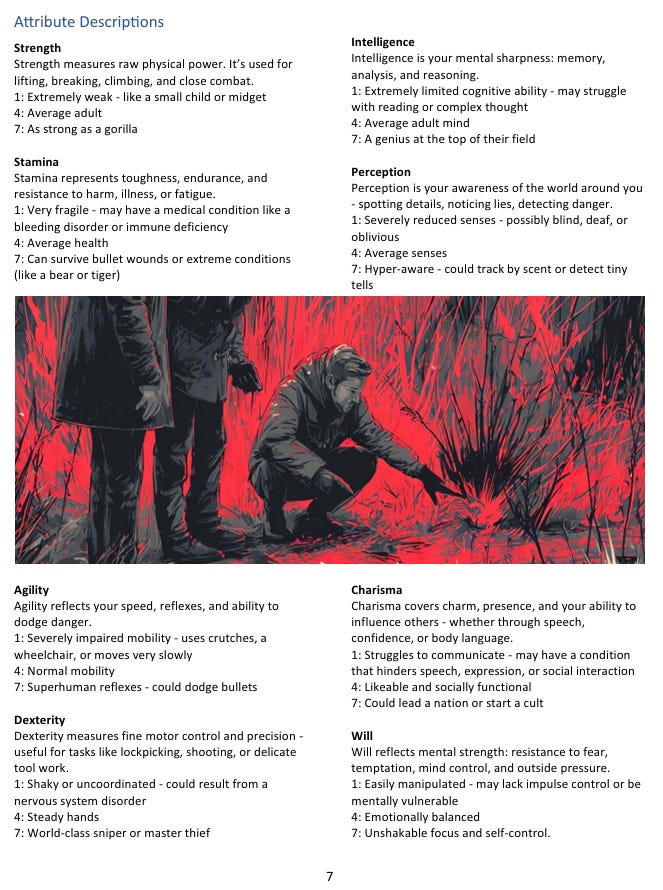
The system is also designed to be internally consistent. The same core mechanic that governs whether you pick a lock also governs whether you land a punch, haggle a better price, or resist the creeping madness that comes from dabbling in forces you don’t fully understand. This consistency means the rules are fast to learn and easy to remember at the table, even when the situations your characters find themselves in are complex.
Gritty, Consequential Realism
This is probably the design philosophy I’m most proud of, and the one that most distinguishes TrueLife from the competition.
Most RPGs use some version of hit points - an abstract buffer that separates your character from death. You can take three sword wounds, two gunshots, and a fireball, and as long as that number doesn’t hit zero, you’re functionally fine. It’s a legacy mechanic that made sense when tabletop RPGs were closer to wargames, but it creates a strange experience: combat that feels consequential in narrative terms but almost meaningless in mechanical terms until the very end.
TrueLife throws that out. Wounds in TrueLife have location and severity. A hit to your leg might cause you to start limping, imposing penalties on movement and any action that requires stable footing. A hit to your weapon arm might make it harder to aim or swing with full force. A serious wound anywhere can send your character into shock - a state where their ability to function degrades rapidly if they don’t receive care. Bleeding wounds require actual treatment; ignore them long enough and your character will weaken and eventually die regardless of how many other resources they have left.
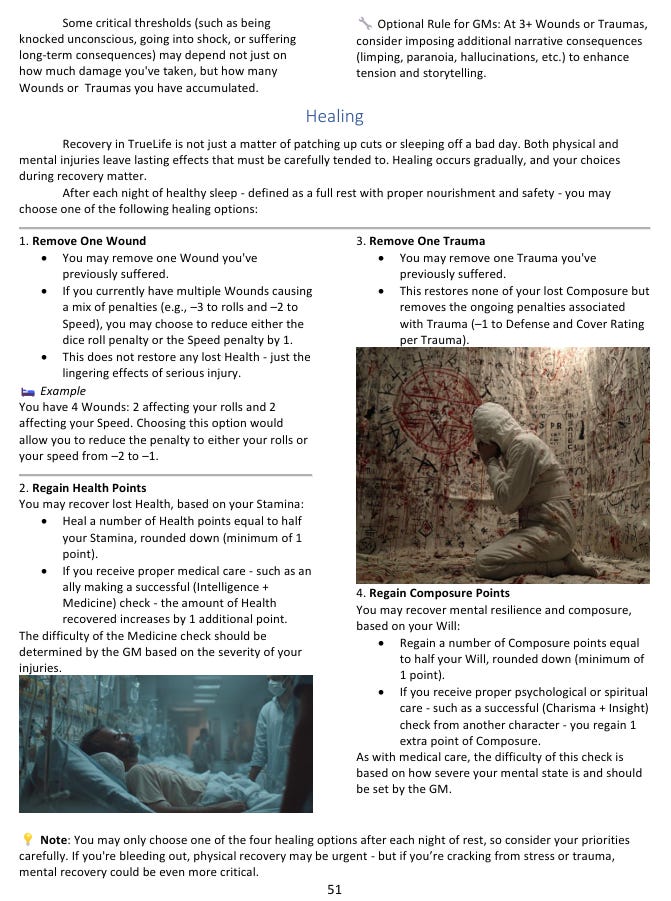
This isn’t meant to be punishing for its own sake. It’s meant to make every combat feel like something with real stakes. When your character gets into a fight in TrueLife, everyone at the table knows that even a “successful” outcome might leave them worse off than when they started. That tension changes how players think about their choices - whether to push forward or find another way, whether to stand and fight or look for an exit - in ways that make the game feel genuinely alive.
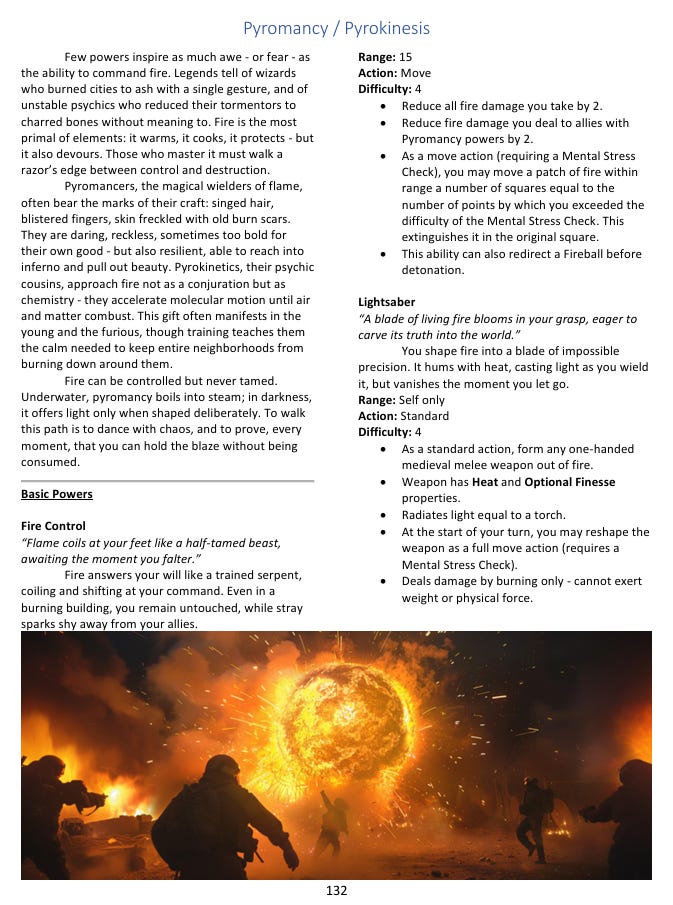
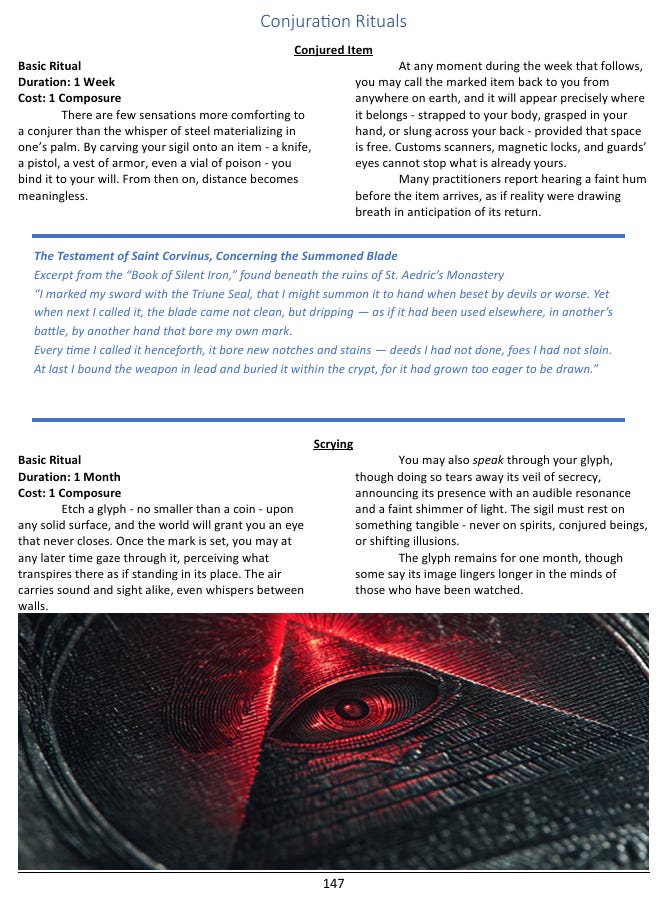
The same philosophy carries through into the magic and psychic systems. Altering reality in TrueLife is not a resource to be managed - it’s a risk to be weighed. Every use of supernatural ability carries the potential for something to go wrong, and the consequences exist on a spectrum from minor and recoverable to severe and permanent. Push your character too hard, too often, and you may find their grip on sanity beginning to slip. The insanity mechanics are designed to be narratively interesting, creating new roleplaying dimensions as a character’s perception of the world shifts in unsettling ways.
Combat That Reflects the World You’re Playing In
One of the things I spent the most time on was making sure that combat feels fundamentally different depending on the setting and the technology involved.
In a medieval fantasy setting, melee combat in TrueLife is a tense, tactical affair. Reach matters - a spearman has options against a swordsman that a knife-fighter doesn’t. Positioning matters - getting flanked or cornered changes your available actions in meaningful ways. Armor matters, but not in a simple “subtract damage” way; heavier armor genuinely changes what kinds of attacks can hurt you, while also affecting your mobility. A knight in full plate isn’t invincible, but they’re also not going to be taken down easily by a peasant with a dagger. Combat in this mode has a chess-like quality, where the maneuvering before the first blow lands can be as important as the fighting itself.
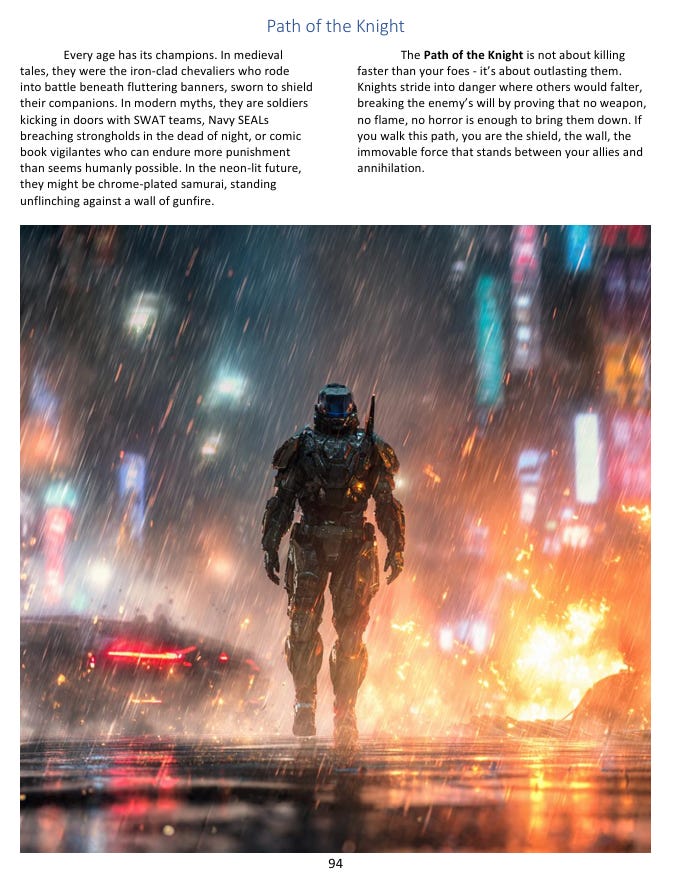
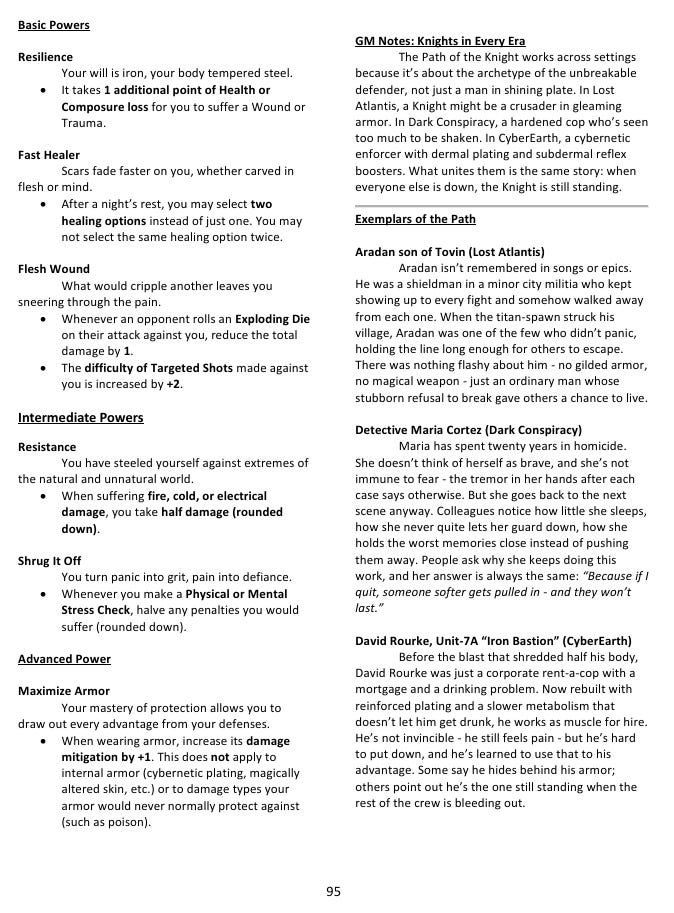
Shift to a modern setting with firearms, and everything changes. Guns are dangerous in TrueLife in a way they often aren’t in RPGs - a single well-placed shot can end a fight, and being caught in the open is often a death sentence. Combat in this mode becomes about cover, movement, and angles. Do you have a clear line of sight? Are you exposing yourself to return fire? Can you suppress your opponent long enough for someone to flank them? The tactical vocabulary is completely different from the medieval mode, and intentionally so.
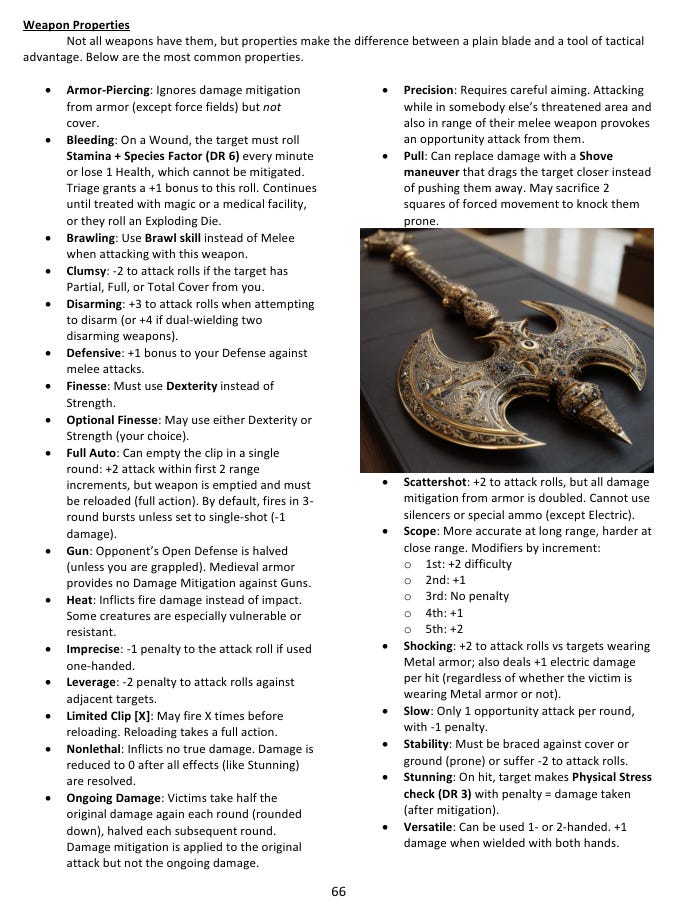
The futuristic CyberEarth setting layers additional complexity onto the modern combat framework - augmented combatants with enhanced reflexes or strength, electronic warfare that can disable weapons or armor systems, and environments designed with corporate security in mind. It rewards players who think about the environment and the technology gap between themselves and their opponents.
Three Settings, One System
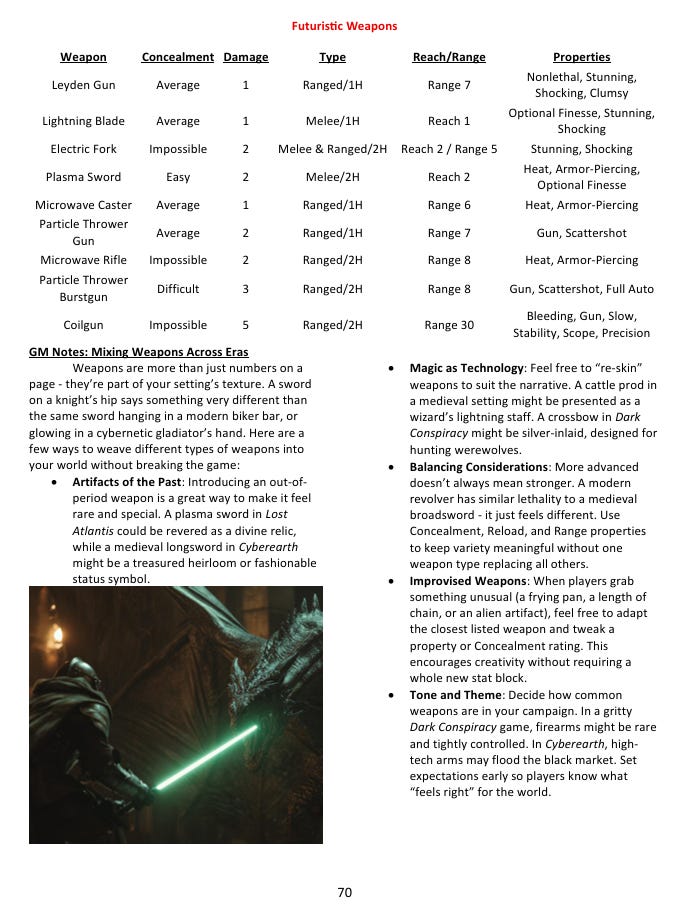
The core rulebook ships with three complete settings, and I want to actually tell you about them rather than just gesture at what genre they belong to.
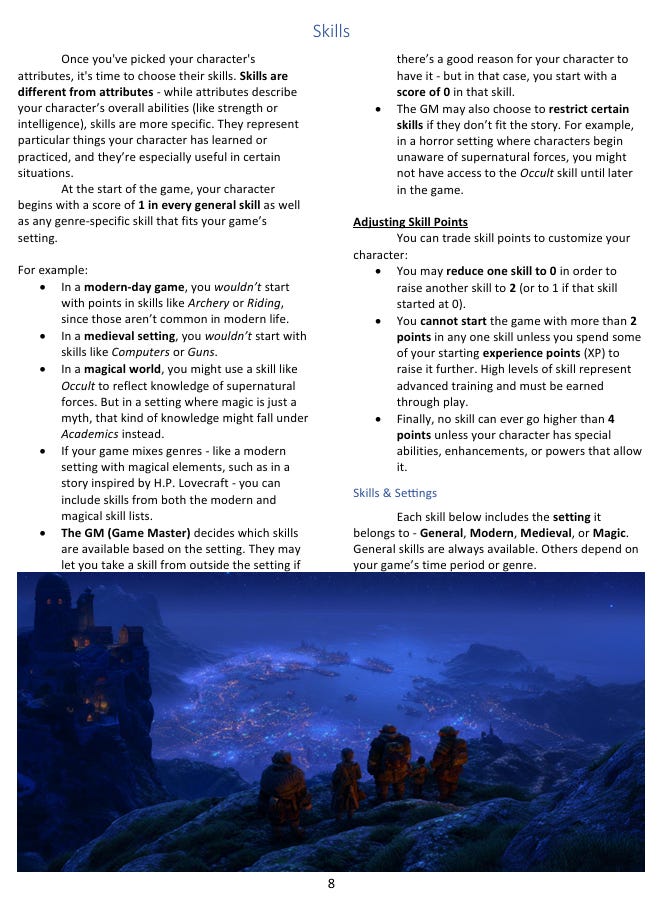
Lost Atlantis is the dark fantasy setting, but forget whatever that phrase just made you picture. No chosen heroes, no ancient prophecies, no sweeping battles between the forces of light and darkness. The closest comparison I can make is Robert E. Howard’s Conan stories - a world where violence is fast and ugly, where the intelligent response to most threats is to not be there when they arrive, and where even a seasoned warrior can be killed by someone he would have considered beneath his notice. The continent of Lemuria has a creation myth involving a war between gods and titans that left the land itself as a kind of divine wreckage - and that sense of something sacred having gone wrong a long time ago permeates the whole setting. You’re not walking through a world in the middle of its heroic age. You’re walking through the aftermath of one.
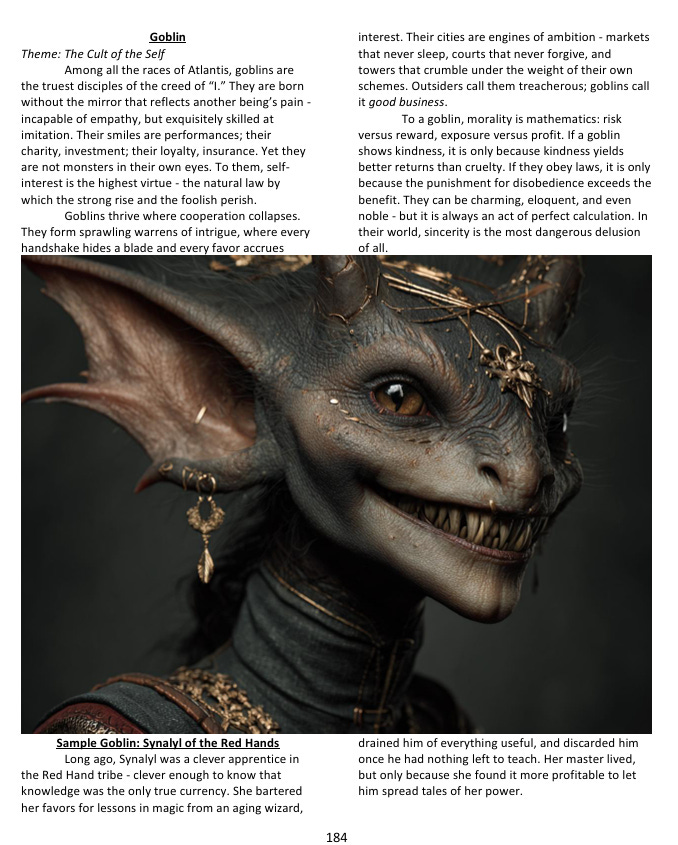
The centerpiece is Atlantis itself - a sprawling, chaotic city-state that functions as a merchant democracy, built on the ruins of an older civilization that collapsed under the weight of its own arrogance. Magic here is ordinary to the point of being mundane. Children learn simple spells before they learn to read. Street performers conjure light for coins. The city has mages the way other cities have blacksmiths - they’re everywhere, they’re useful, and nobody finds them particularly remarkable. A campaign set in Atlantis leans hard into the sorcery side of sword-and-sorcery: political intrigue in the Senate, rival magical factions, ancient knowledge surfacing from the ruins underneath the city.
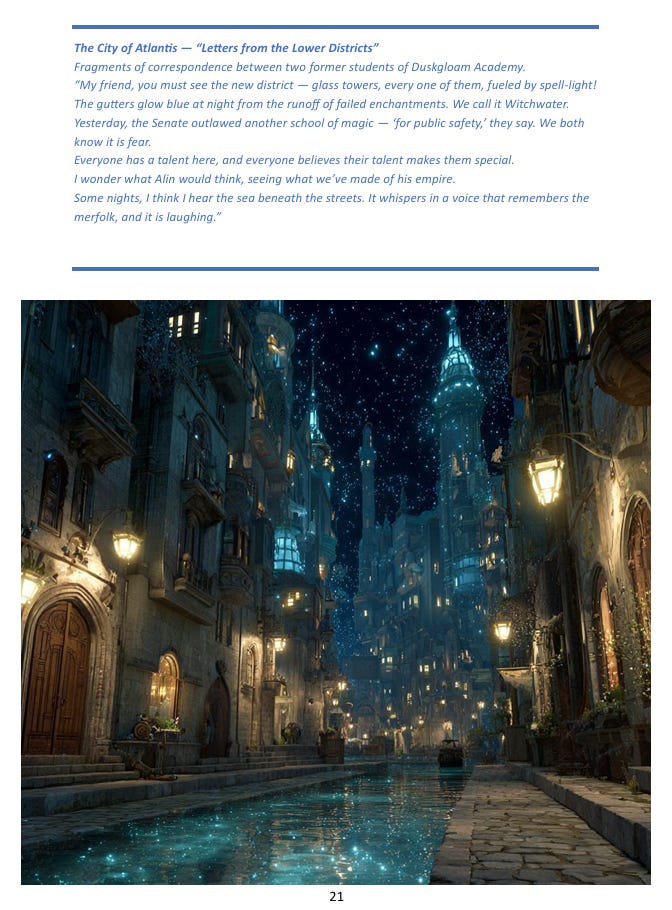
But travel away from Atlantis and something shifts. Magic doesn’t disappear exactly, but it becomes rarer, stranger, and considerably less domesticated. The people of the outer regions never had access to Atlantis’s academies and institutions, so what magic exists out there has developed along different lines - folk traditions, religious practices, things passed down in secret rather than taught in classrooms. By the time you reach the frozen north or the deep jungle, you’re in territory where a campaign can go for months without a single spell being cast, and where the occasional genuine supernatural occurrence lands with real weight precisely because it’s so unexpected. A game set in the goblin-haunted tundra or the silk-trader routes through Arachnid territory is much closer to pure sword-and-sorcery survival fiction - the swords are doing most of the work, and magic is something you encounter rather than something you use. The setting essentially gives you a dial that GMs can adjust depending on what kind of game they want to run, just by choosing where the story takes place.
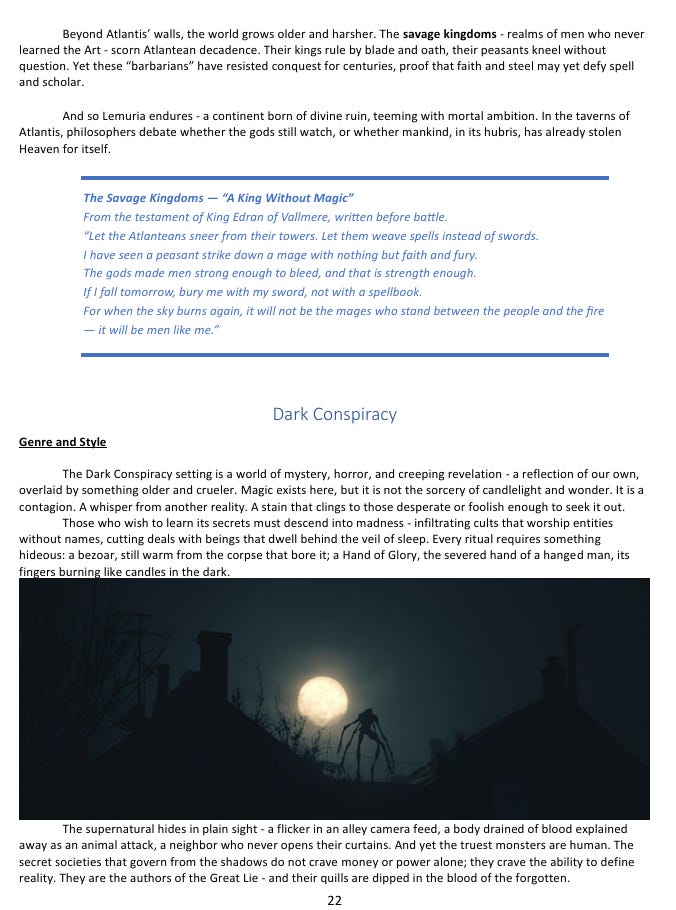
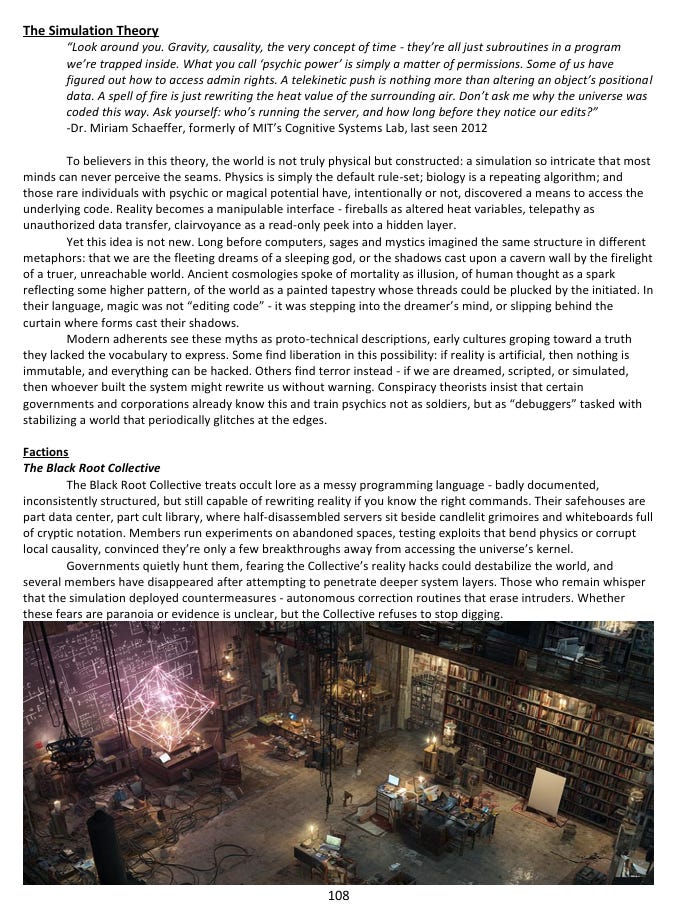
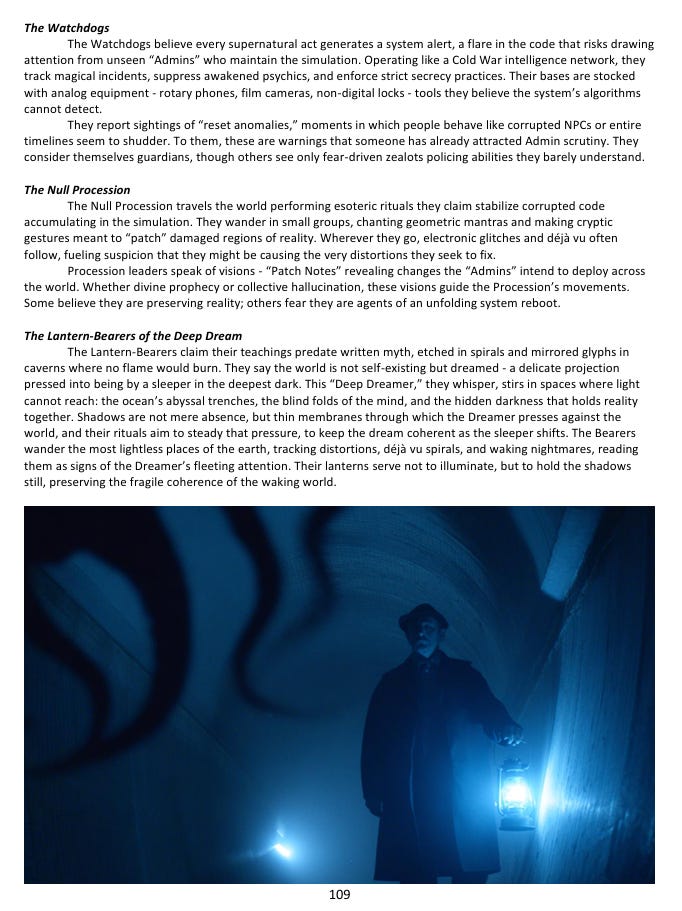
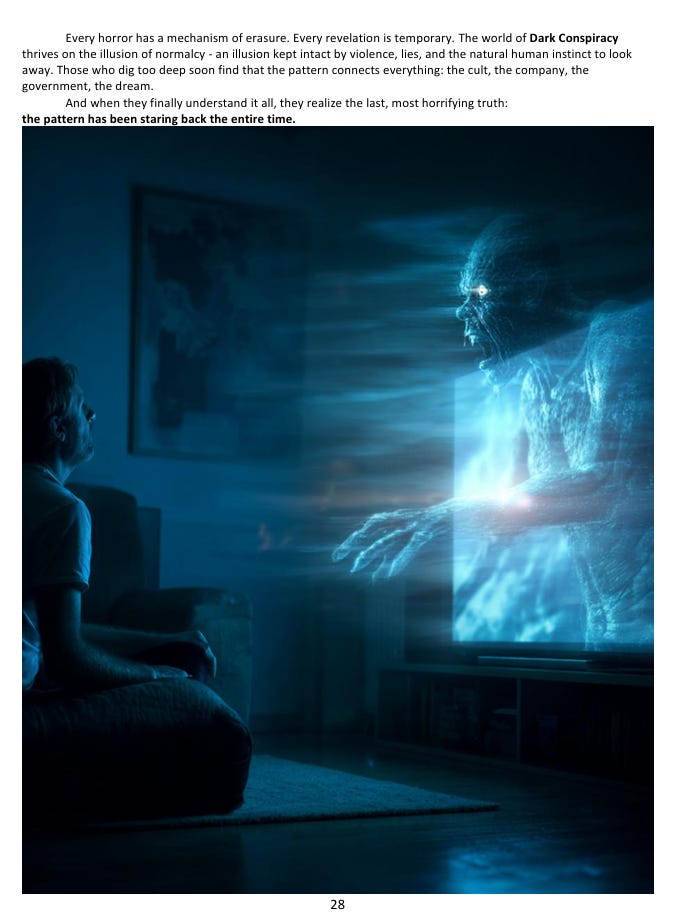
Dark Conspiracy starts from a simple and deeply unsettling premise: what if our world is exactly as it appears on the surface, but something ancient and hungry has been living alongside us for our entire history without most of us ever noticing? Magic exists in this setting, but it bears almost no resemblance to the magic in Lost Atlantis. It’s less a skill you develop and more a door you open - and once open, it tends to attract things you didn’t necessarily want to attract. Actually learning to use it means going to places and meeting people that any reasonable person would avoid: cults devoted to things that don’t have names, rituals that require terrible components and carry great risk.
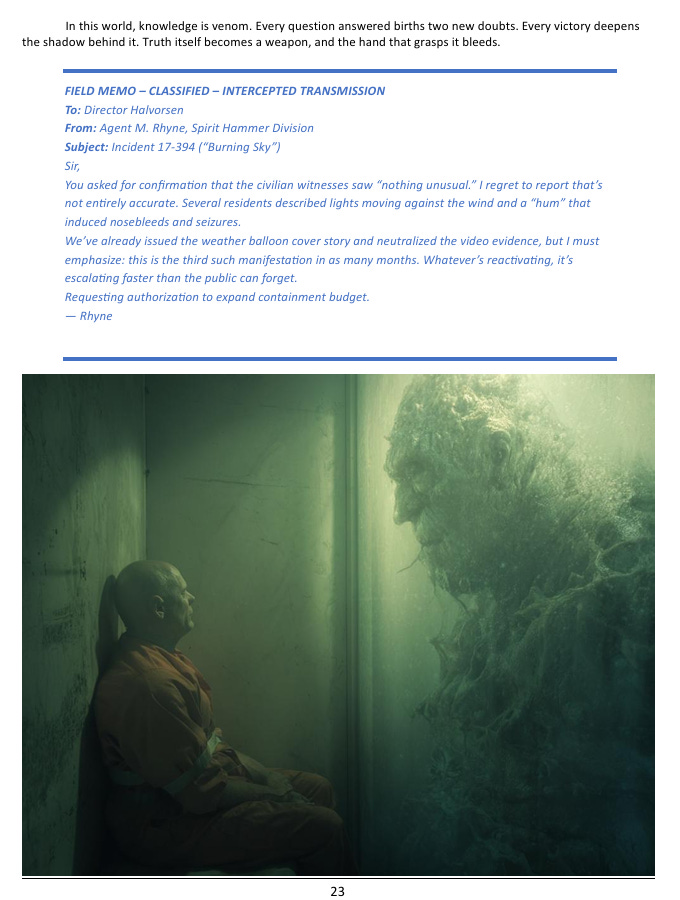
The reason this has all stayed hidden is a concept I call the Great Lie - not a single organized cover-up, but a kind of self-sustaining ecosystem of concealment. The supernatural predators who live among us have obvious reasons to keep humanity unaware. Multiple government agencies are fighting covert wars over who gets to control the paranormal, which means they’re more focused on each other than on disclosure. Private corporations are running experiments on human subjects that would cause international incidents if they became public. And underneath all of it, the oldest and most powerful non-human factions have spent centuries positioning themselves to take advantage of the moment - which is apparently approaching - when all of this secrecy finally breaks down. The horror in this setting isn’t a creature leaping out of the dark. It’s the gradual, nauseating realization that everything connects, and that whatever is at the center of that web has been aware of you for much longer than you’ve been aware of it.
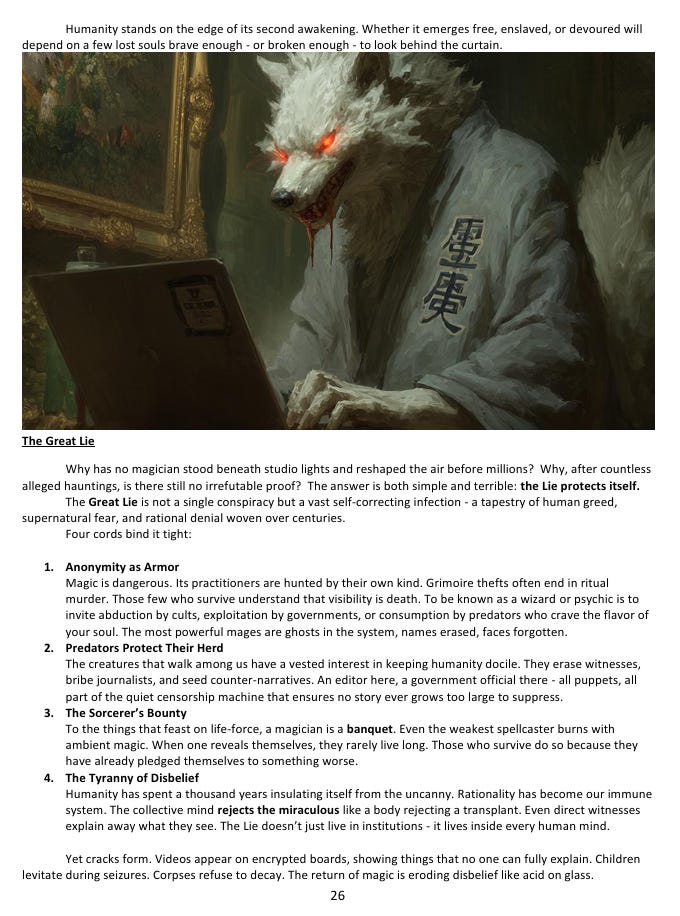
I think this one will particularly resonate with readers of this Substack. If you’re someone who thinks about how systems really operate versus how they present themselves publicly, Dark Conspiracy is essentially that instinct taken to its most extreme possible conclusion.
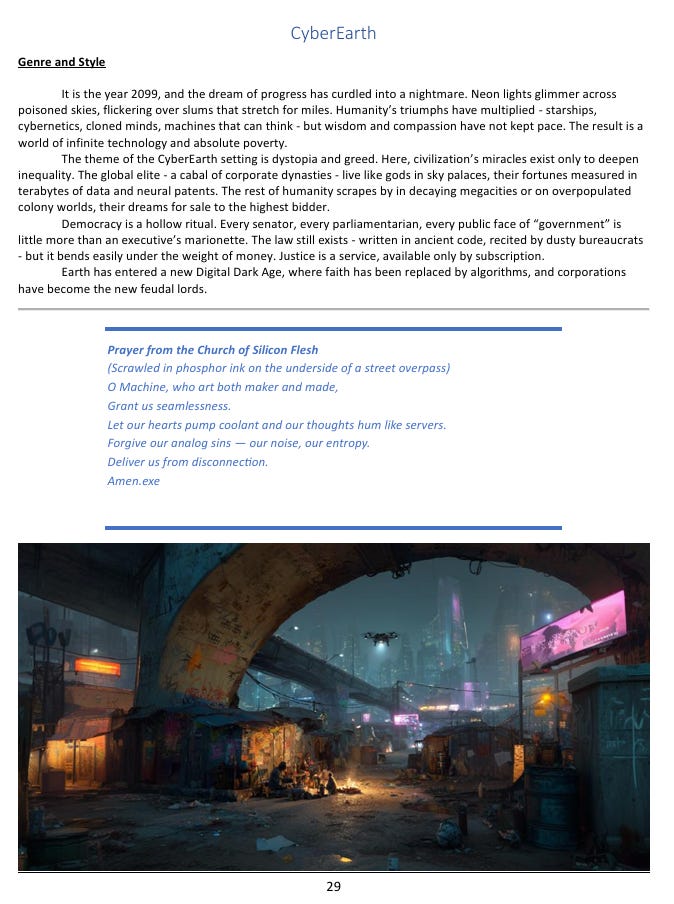
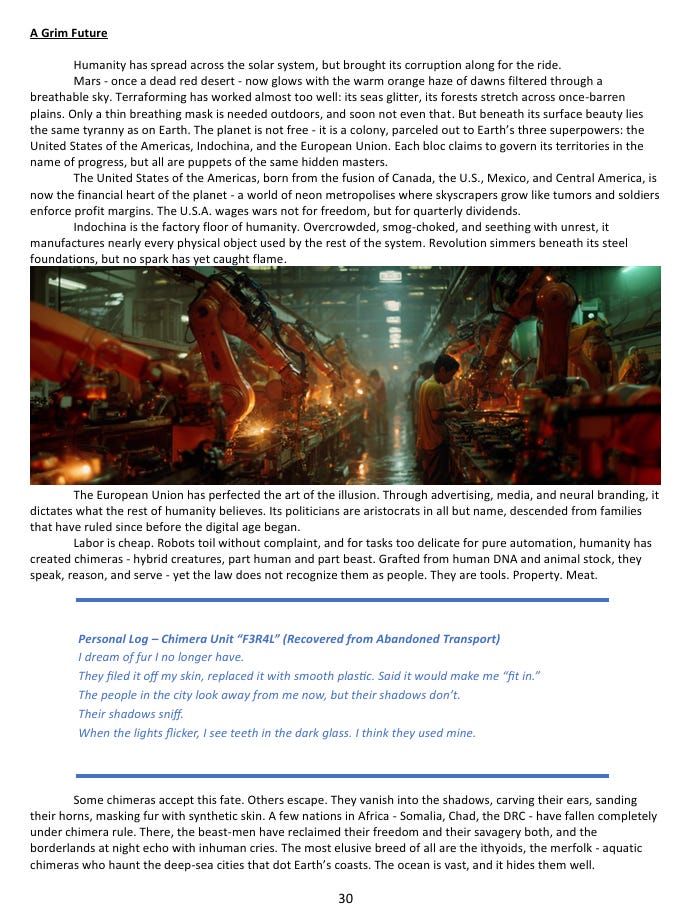
CyberEarth is set a little over seventy years from now, and I tried to make it feel like a genuine extrapolation rather than a stylistic exercise. Humanity has colonized Mars, established underwater cities on Europa, and built a pleasure colony on Titan where the low gravity lets people fly on artificial wings and every vice known to man is available for the right price. The technology is genuinely impressive. What hasn’t kept pace is everything else. Corporations have absorbed governments to the point where elections are essentially a performance - the people nominally in charge are so thoroughly owned by the dynasties behind them that the distinction barely matters. Automation has made most ordinary human labor economically worthless, and the prosperity that generates flows exclusively upward, as it tends to do.
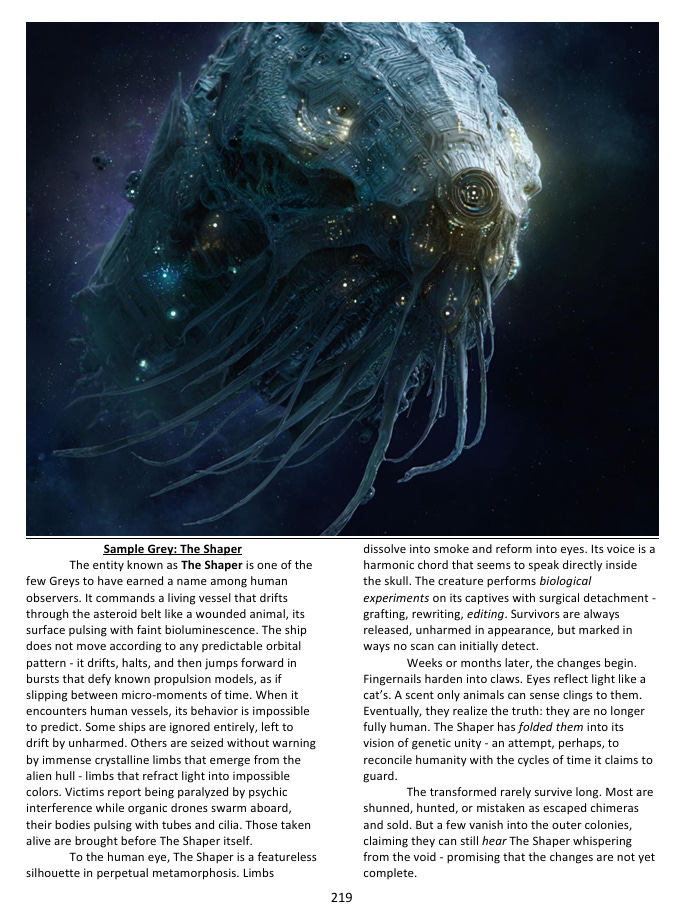
The element I find most compelling is the chimeras - beings engineered from human and animal genetic material to serve as a labor force, legally classified as property rather than people. Some have escaped that classification by disappearing into the underclass of the megacities, surgically modifying themselves to pass as human. Others have carved out actual autonomy in parts of the world where central authority has collapsed entirely. The aquatic chimeras - engineered merfolk - are the hardest to track or control, for obvious reasons. Meanwhile, out in the asteroid belt, humanity is in a state of ongoing conflict with an alien species that nobody understands - not their motives, not their biology, not what they’re ultimately trying to accomplish. Even the humans who work for them don’t know. They’re just following instructions from something that hasn’t explained itself and apparently doesn’t feel the need to.
One of the things I built into the system from the start is that these settings aren’t sealed off from each other. The merfolk show up in both Lost Atlantis and CyberEarth, separated by thousands of years and transformed almost beyond recognition, but recognizably the same lineage. A relic from Lost Atlantis can become an object of obsessive study in a Dark Conspiracy campaign. You could run a cyberpunk setting where magic has returned alongside advanced technology - my book suggests the image of a dragon running a corporation as a ruthless CEO, which I find genuinely delightful. The system accommodates all of it because it’s grounded in consistent underlying logic rather than in genre conventions, and genre conventions are mostly just habits anyway.
An Open License for Collaborative Worldbuilding
I believe the best RPG settings are collaborative - they grow richer when more people contribute to them. TrueLife uses an Open Game License, which means that if you design a setting using the system, write an adventure that your players loved, or create supplementary rules for a genre I haven’t covered, you can publish that work and sell it. I want people who engage with TrueLife to be able to build on it and benefit from what they create.
I’ve scattered some excerpts and artwork throughout this post to give you a sense of what you’re getting.
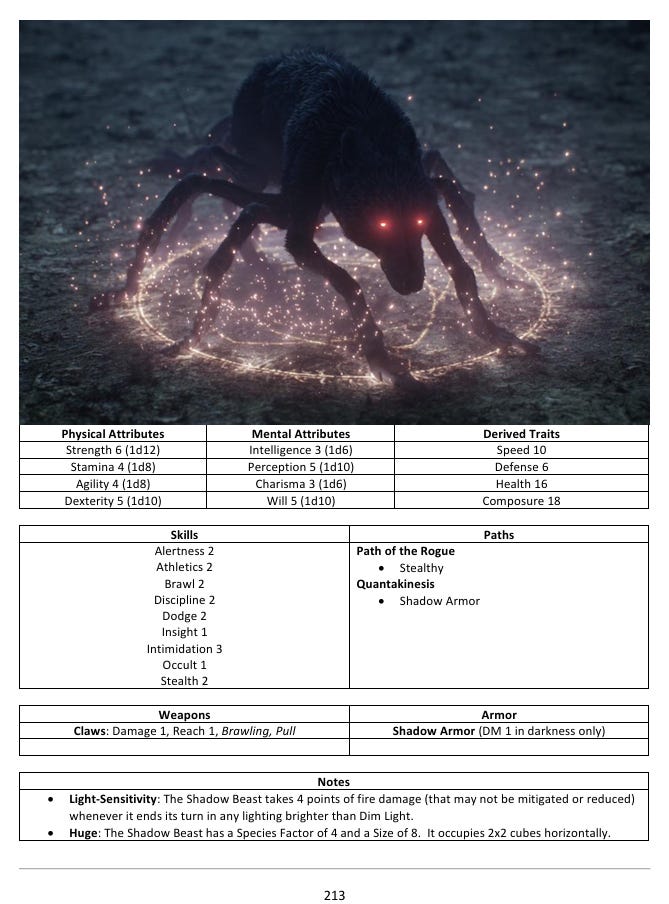
If any of this sounds like something you’d enjoy - whether you’re a longtime tabletop player or someone who’s always been curious about the hobby - I’d genuinely love to hear what you think. This has been a long time coming, and I’m excited to finally get it into people’s hands.